

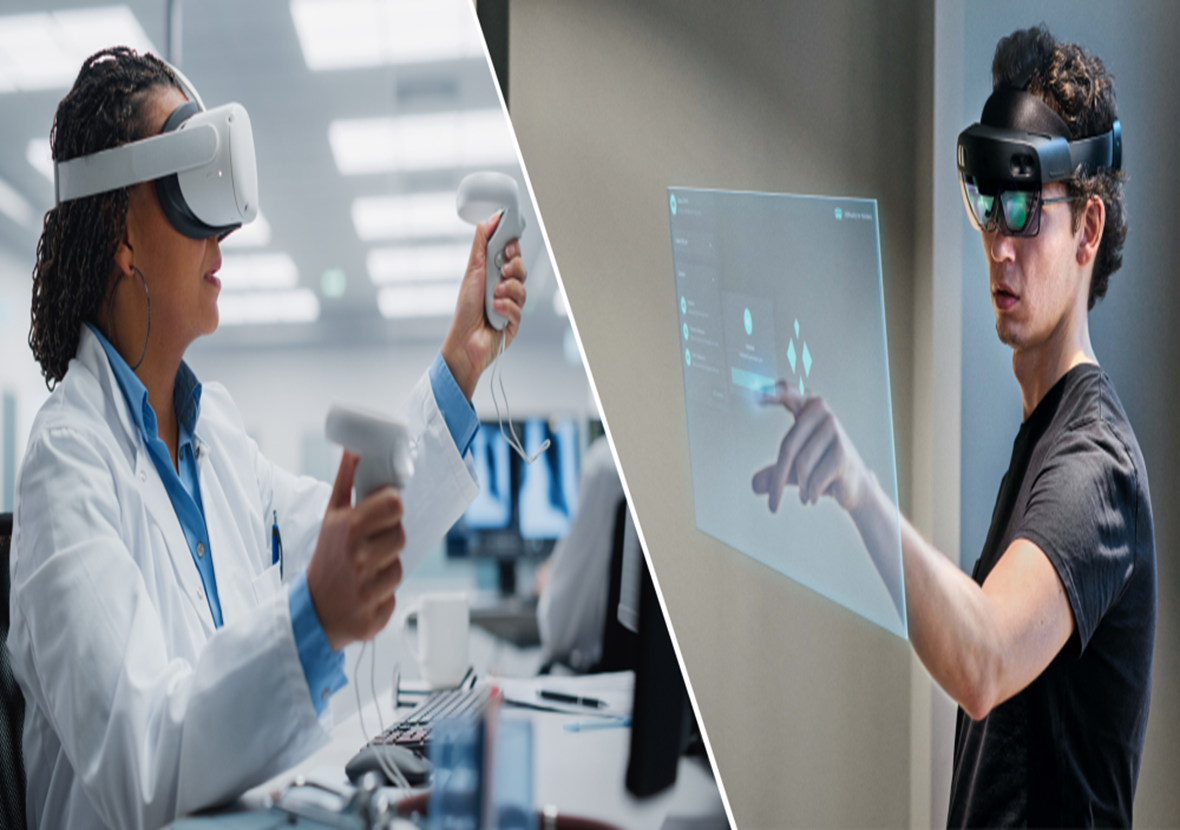
Understanding the Future Impact of AR and VR Technologies
Augmented Reality (AR) and Virtual Reality (VR) technologies are poised to revolutionize how we interact with digital content and the physical world. As hardware becomes more accessible and software more sophisticated, these immersive technologies are transforming industries and creating new possibilities for human-computer interaction.
This comprehensive exploration examines the current state and future potential of AR and VR technologies, analyzing their impact across key sectors and the technological advancements that will shape their evolution.
Current State of AR and VR Technology
AR and VR have evolved from niche gaming applications to mainstream tools with broad commercial and industrial applications. Modern headsets offer higher resolution displays, improved comfort, and more intuitive controls that make immersive experiences accessible to wider audiences.
The integration of advanced sensors, AI processing, and cloud computing has enhanced the realism and interactivity of AR and VR experiences. Wireless connectivity and standalone devices have removed many of the barriers that previously limited adoption.
Mobile AR applications have achieved mass market penetration through smartphone cameras and GPS, while dedicated VR headsets continue to improve in performance and affordability.
- Hardware Advancements: Higher resolution and more comfortable wearables
- Software Maturity: More sophisticated and realistic experiences
- Mobile Integration: Smartphone-based AR reaches mass audiences
- Wireless Freedom: Standalone devices without external connections
Transforming Education and Training
AR and VR are revolutionizing education by creating immersive learning environments that enhance understanding and retention. Virtual field trips allow students to explore historical sites, scientific phenomena, and distant cultures without leaving the classroom.
Professional training programs use VR simulations to provide safe, repeatable practice environments for high-risk professions like medicine, aviation, and emergency response. AR overlays provide real-time guidance and information during hands-on learning experiences.
The personalized nature of immersive learning accommodates different learning styles and paces, making education more inclusive and effective.
- Immersive Learning: Virtual exploration of complex concepts
- Safe Training: Risk-free practice in dangerous scenarios
- Real-Time Guidance: AR overlays enhance hands-on learning
- Personalized Education: Adaptive learning experiences
Healthcare and Medical Applications
In healthcare, AR and VR technologies are improving diagnosis, treatment, and patient care. Surgeons use AR overlays during procedures to access patient data and imaging without looking away from the operating field.
VR therapy treats phobias, PTSD, and chronic pain through controlled exposure and relaxation techniques. Medical training programs provide realistic simulations that prepare healthcare professionals for complex procedures.
Remote patient monitoring and telemedicine applications enhanced by AR provide better care delivery, especially in underserved areas.
- Surgical Assistance: AR overlays during medical procedures
- Therapeutic Applications: VR treatment for mental health conditions
- Medical Training: Realistic procedure simulations
- Remote Care: Enhanced telemedicine capabilities
Manufacturing and Industrial Applications
AR and VR are transforming manufacturing through digital twins, remote assistance, and virtual prototyping. Maintenance technicians use AR glasses to access equipment manuals and troubleshooting guides overlaid on machinery.
Virtual reality training programs teach complex assembly procedures and safety protocols in immersive environments. Digital twins allow engineers to test and optimize designs before physical prototyping.
Remote collaboration tools enable experts to provide guidance to on-site workers through AR annotations and shared virtual spaces.
- Maintenance Support: AR-guided equipment repair and maintenance
- Virtual Prototyping: Digital testing before physical manufacturing
- Remote Collaboration: Expert guidance from any location
- Safety Training: Immersive hazard recognition and response
Retail and Consumer Experiences
AR and VR are reshaping retail by creating virtual shopping experiences and personalized product interactions. Customers can virtually try on clothing, visualize furniture in their homes, or test products before purchase.
VR showrooms allow customers to explore products in immersive environments, while AR apps provide additional product information and reviews through smartphone cameras.
These technologies enhance customer engagement and reduce return rates by ensuring better product understanding and fit.
- Virtual Try-On: Test products before purchasing
- Immersive Showrooms: Explore products in virtual spaces
- Enhanced Information: AR product details and reviews
- Personalized Shopping: Tailored recommendations and experiences
Entertainment and Social Interaction
VR is creating new forms of entertainment and social connection, from immersive gaming experiences to virtual concerts and social gatherings. Social VR platforms allow people to interact in virtual spaces regardless of physical location.
AR enhances real-world experiences by overlaying digital information and interactive elements. Location-based AR games and cultural heritage applications create engaging experiences that blend digital and physical worlds.
These technologies are redefining entertainment and social interaction, especially for remote or isolated individuals.
- Immersive Gaming: Next-generation interactive entertainment
- Virtual Social Spaces: Connect with others in virtual environments
- Augmented Events: Enhanced live experiences with digital elements
- Cultural Preservation: Interactive historical and cultural experiences
Future Developments and Challenges
The future of AR and VR will be shaped by advancements in hardware miniaturization, AI integration, and 5G connectivity. Mixed reality experiences that seamlessly blend physical and digital worlds will become more prevalent.
Challenges include content creation costs, privacy concerns, and the need for standardized platforms. However, decreasing hardware costs and improving software tools are making these technologies more accessible.
The integration of haptic feedback, eye tracking, and brain-computer interfaces will create even more immersive and intuitive experiences.
- Mixed Reality: Seamless blending of physical and digital worlds
- AI Integration: Smarter and more adaptive experiences
- 5G Connectivity: Enhanced performance and reduced latency
- Advanced Interfaces: More natural interaction methods
Business and Economic Impact
AR and VR are creating new business opportunities and transforming existing industries. The technology sector is experiencing rapid growth, with applications extending to real estate, tourism, marketing, and professional services.
Early adopters are gaining competitive advantages through improved training, customer experiences, and operational efficiencies. The economic impact extends to content creation, hardware manufacturing, and software development.
As these technologies mature, they will create entirely new markets and business models that capitalize on immersive experiences.
- New Markets: Creation of immersive technology industries
- Competitive Advantage: Early adopters gain market leadership
- Operational Efficiency: Improved processes across industries
- Economic Growth: Job creation in technology development
Preparing for an AR/VR Future
Organizations should prepare for AR and VR adoption by assessing current capabilities, identifying use cases, and developing implementation strategies. Pilot programs and partnerships with technology providers can help evaluate potential applications.
Investing in skills development and content creation capabilities will be crucial for successful adoption. Organizations should also consider ethical implications and develop policies for responsible technology use.
AR and VR technologies are not just tools for entertainment but powerful platforms that will reshape how we work, learn, and interact with the world around us.
Disclaimer: This article is for informational purposes only and does not constitute technology recommendations or investment advice. Please consult with qualified technology professionals for specific implementation needs.









Comments 0
Login Required
Please sign in to view and post comments.